
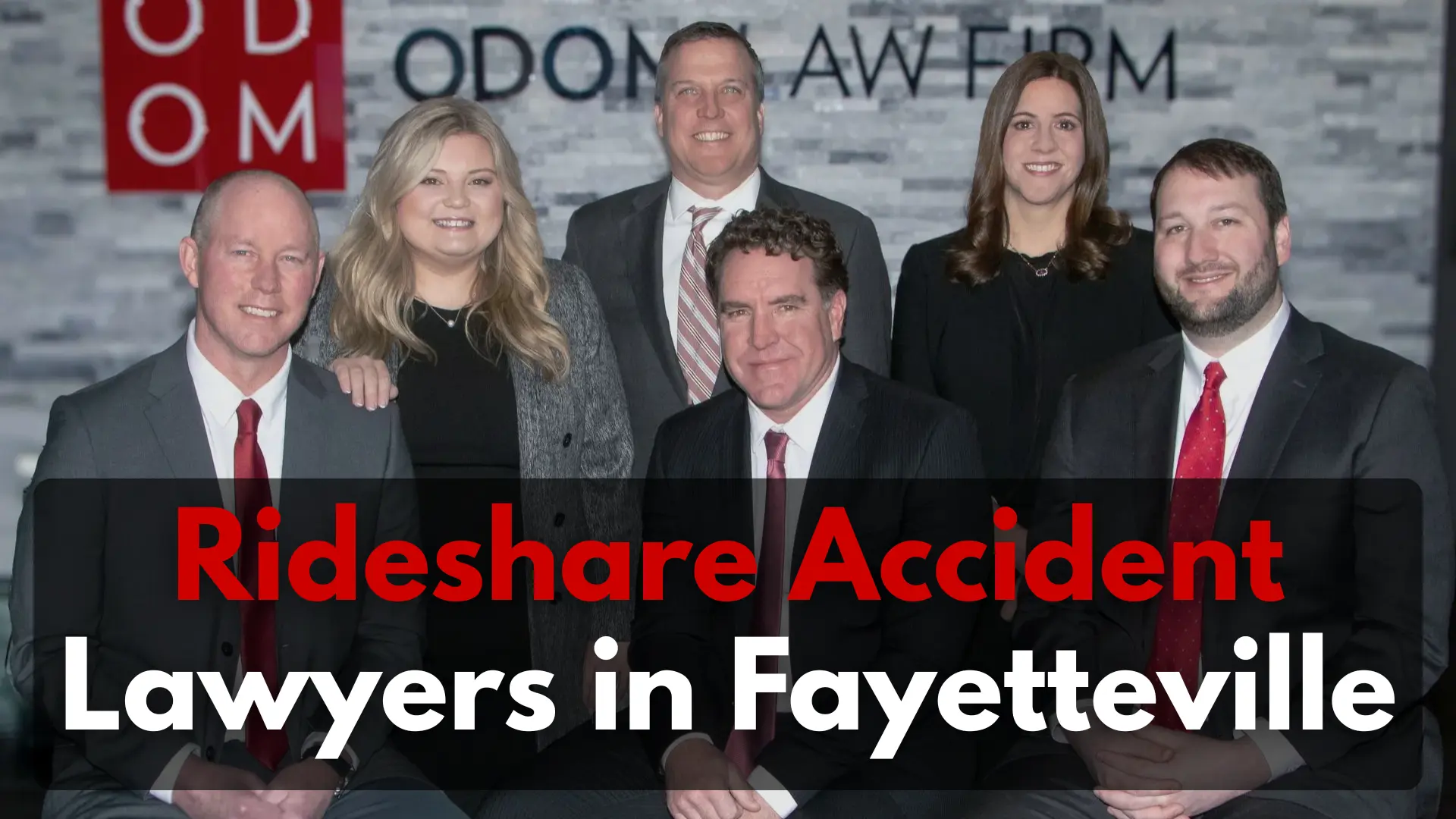
If you’ve been injured in an Uber or Lyft accident in Fayetteville, you deserve compensation for your injuries and losses. Rideshare accidents present unique legal challenges. At Odom Law Firm, our experienced attorneys understand rideshare liability and insurance coverage. We work on a contingency fee basis, meaning you pay nothing unless we recover compensation for you. Contact us today for a free consultation to discuss your case.
Why Choose Odom Law Firm:
If you were injured in a rideshare accident involving an Uber, Lyft, or other app-based vehicle, you need a law firm with focused experience in complex personal injury claims. Since 1982, Odom Law Firm has helped Fayetteville and Arkansas residents pursue compensation after rideshare and vehicle accidents. Here’s what sets our firm apart:
- Decades handling motor vehicle accident cases, including rideshare, taxi, and multi-party crash claims.
- Immediate investigation, evidence preservation, and coordination with insurance companies covering rideshare drivers.
- Fully contingency-based representation—clients pay nothing unless we win compensation.
- Local resources and a national co-counsel network for large or disputed cases.
- Commitment to clear communication, honest case evaluation, and advocacy at every step.
Let Odom Law Firm help you recover after a rideshare accident and advocate for your best outcome.
Why Rideshare Accidents Require Legal Representation
Rideshare accidents differ significantly from standard motor vehicle accidents. When you’re injured in an Uber or Lyft accident, multiple parties may share liability. Additionally, multiple insurance policies may apply to your claim.
Rideshare companies like Uber and Lyft classify their drivers as independent contractors rather than employees. This distinction creates significant legal implications. While the rideshare company maintains insurance coverage for certain situations, that coverage has strict limitations. Coverage may not apply depending on the driver’s app status at the time of the accident. Insurance companies use these coverage gaps to minimize payouts, which is why you need an attorney who understands these nuances.
The complexity doesn’t end there. You may have claims against the rideshare driver’s personal auto insurance, the rideshare company’s commercial insurance, your own underinsured motorist coverage, or even third-party drivers involved in the collision. Our attorneys investigate all potential sources of recovery to maximize your compensation. This is why working with a Fayetteville car accident lawyer experienced in rideshare claims is essential.
Key differences between rideshare and standard car accident claims:
- Multiple insurance policies may apply based on app status (offline, waiting for ride, actively transporting)
- Rideshare companies have limited direct liability due to independent contractor status
- Coverage gaps may leave victims without compensation if not properly addressed
- Insurance companies actively work to minimize rideshare accident payouts
- Knowledge of rideshare company policies and procedures is essential
Common Causes of Rideshare Accidents in Fayetteville
Understanding how rideshare accidents occur helps establish liability and supports your claim for compensation. Rideshare drivers face unique pressures and circumstances that contribute to accidents at higher rates than the general driving population.
Distracted Driving remains one of the leading causes of rideshare accidents. Drivers constantly interact with the Uber or Lyft app, check navigation systems, communicate with passengers, and manage ratings. This divided attention takes their focus off the road at critical moments, leading to collisions. Similar to other car accident scenarios, distracted driving creates serious liability. According to the National Highway Traffic Safety Administration (NHTSA), distracted driving claimed 3,308 lives in 2022.
Driver Fatigue is another significant factor. Rideshare drivers often work long hours to maximize earnings. They drive during late-night and early-morning hours when alertness is compromised. The pressure to maintain high ratings and accept frequent rides encourages drivers to work beyond safe limits, resulting in drowsy driving accidents. The Centers for Disease Control and Prevention (CDC) reports that drowsy driving is responsible for approximately 1 in 25 adult drivers.
Speeding and Aggressive Driving occur when drivers rush to pick up passengers or meet time expectations. The rideshare business model incentivizes speed, as drivers earn more by completing more trips. This urgency translates into traffic violations and dangerous driving behaviors.
Poor Vehicle Maintenance affects many rideshare vehicles. Some drivers operate older vehicles that may have mechanical issues affecting braking, steering, or tire safety. Rideshare companies don’t require vehicle inspections beyond basic safety standards, leaving maintenance decisions to individual drivers. Defective vehicles may also trigger product liability claims.
Unsafe Lane Changes and Traffic Violations happen when drivers navigate unfamiliar routes or rush between destinations. Improper lane changes, failure to signal, and running red lights are common in rideshare accidents.
Unfamiliarity with Routes causes accidents when drivers new to ridesharing or unfamiliar with Fayetteville’s streets make sudden maneuvers or fail to anticipate road conditions.
Types of Injuries From Rideshare Accidents
Rideshare accidents often result in serious injuries because passengers have limited protection compared to drivers. Passengers sit in the back seat without airbags, may not be wearing seatbelts, and experience sudden impacts with minimal warning.
Whiplash and Neck Injuries are common in rear-end collisions. The sudden acceleration and deceleration causes the head and neck to snap forward and backward, straining muscles and ligaments. While whiplash may seem minor, it can cause chronic pain and long-term complications. The American Academy of Orthopaedic Surgeons (AAOS) provides comprehensive guidelines on whiplash injury management.
Spinal Cord Injuries represent some of the most serious rideshare accident injuries. These injuries can result in partial or complete paralysis, requiring lifetime medical care, rehabilitation, and assistive devices. The financial and personal impact of spinal cord injuries is devastating. Victims often require extensive rehabilitation and ongoing medical treatment. Our firm has extensive experience handling catastrophic injury cases involving permanent disability.
Traumatic Brain Injuries (TBI) occur when the head strikes interior surfaces or experiences sudden acceleration forces. Concussions, contusions, and more severe brain injuries can cause cognitive impairment, memory loss, personality changes, and long-term neurological complications. The Brain Injury Association of America estimates that approximately 1.5 million Americans sustain a TBI annually.
Broken Bones and Fractures commonly affect arms, legs, ribs, and pelvis in rideshare accidents. These injuries require surgery, physical therapy, and extended recovery periods. Some fractures result in permanent disability or chronic pain.
Internal Injuries and Organ Damage may not be immediately apparent but can be life-threatening. Blunt force trauma can damage internal organs, causing internal bleeding and requiring emergency surgery.
Psychological Trauma, including post-traumatic stress disorder (PTSD), anxiety, and depression, frequently follows serious accidents. Victims may develop a fear of riding in vehicles or leaving their homes, affecting their quality of life and ability to work.
The severity of injuries in rideshare accidents often exceeds that in standard car accidents because passengers lack the protective features available to vehicle operators. This increased injury severity justifies substantial compensation claims.
Who Is Liable in a Rideshare Accident?
Determining liability in a rideshare accident requires careful investigation and legal analysis. Multiple parties may share responsibility, and identifying all liable parties is crucial to maximizing your recovery.
The Rideshare Driver’s Negligence is the primary source of liability. If the driver violated traffic laws, drove recklessly, or failed to exercise reasonable care, they bear responsibility for your injuries. The driver’s personal auto insurance typically provides coverage for accidents occurring during rideshare activities, though coverage limits may be insufficient.
The Rideshare Company’s Responsibility is limited but not nonexistent. While Uber and Lyft classify drivers as independent contractors to avoid direct employment liability, the companies maintain commercial insurance policies. Coverage applies when the driver is actively transporting passengers or waiting for ride requests with the app engaged. However, coverage may not apply if the driver was offline or between trips.
Third-Party Drivers involved in the collision may also bear liability. If another vehicle caused the accident, that driver’s insurance may provide additional recovery sources. This is similar to hit and run accidents where multiple parties may be involved. We also handle uninsured driver accidents where the at-fault driver lacks adequate coverage.
Vehicle Manufacturer Defects occasionally contribute to accidents. Defective brakes, steering systems, or tires may cause accidents regardless of driver conduct. In these cases, the vehicle manufacturer may be liable under product liability law.
Road Conditions and Municipal Liability may apply if poorly maintained roads, missing signage, or inadequate traffic control contributed to the accident. Municipalities may be liable for dangerous conditions they failed to remedy.
According to Uber and Lyft, Insurance Coverage Based on App Status significantly affects liability determination:
- App Offline: Only the driver’s personal auto insurance applies; rideshare company coverage does not
- App On, Waiting for Ride: Rideshare company provides limited coverage ($50,000-$100,000, depending on the company)
- Actively Transporting Passenger: Rideshare company provides full coverage ($1,000,000 per accident)
Our investigation identifies all liable parties and determines which insurance policies apply to your specific situation. This comprehensive approach ensures you receive maximum compensation from all available sources.
What Compensation Can You Recover?
Rideshare accident victims are entitled to recover damages for all losses resulting from their injuries. Compensation falls into several categories, each addressing different aspects of your harm.
Medical Expenses include all costs associated with treating your injuries. This encompasses emergency room care, hospitalization, surgery, medications, physical therapy, and ongoing medical treatment. We also pursue compensation for future medical expenses you’ll incur as your injuries heal or require long-term management.
Lost Wages and Lost Earning Capacity compensate you for income lost while recovering from your injuries. If your injuries prevent you from returning to your previous job, we will pursue compensation for reduced earning capacity. This is particularly important for serious injuries causing permanent disability.
Pain and Suffering Damages recognize the physical pain, emotional distress, and reduced quality of life resulting from your injuries. These non-economic damages often represent the largest component of rideshare accident settlements, particularly in cases involving serious or permanent injuries.
Vehicle Repair or Replacement Costs cover damage to your personal vehicle or rideshare vehicle if you were a driver. We pursue these damages from the at-fault party’s insurance.
Property Damage includes personal belongings damaged in the accident, such as phones, laptops, or other items in the vehicle.
Punitive Damages may apply in cases involving gross negligence or reckless conduct. These damages punish the defendant and deter similar behavior in the future. While not available in all cases, they significantly increase recovery when applicable.
The value of your case depends on multiple factors, including injury severity, clarity of liability, insurance policy limits, and the strength of evidence. Each case is unique, and our attorneys evaluate all factors to determine appropriate compensation demands.
How Odom Law Firm Handles Your Rideshare Accident Claim
At Odom Law Firm, we handle rideshare accident claims with the expertise and dedication our clients deserve. Our process is designed to maximize your recovery while minimizing stress during your recovery period.
Free Initial Consultation and Case Evaluation begins your relationship with our firm. We listen to your account of the accident, review available evidence, and explain your legal options. This consultation is completely free and carries no obligation.
Thorough Investigation and Evidence Gathering is critical to building a strong case. We obtain police reports, medical records, witness statements, and accident scene photographs. We also request rideshare company records, including driver information, vehicle maintenance records, and app data showing the driver’s status at the time of the accident. This comprehensive investigation identifies all liable parties and establishes clear liability.
Insurance Policy Analysis and Coordination ensures we pursue all available coverage. We analyze the rideshare driver’s personal auto insurance, the rideshare company’s commercial insurance, your own underinsured motorist coverage, and any other applicable policies. We coordinate claims across multiple insurers to maximize your total recovery.
Negotiation with Insurance Companies is where our experience provides significant value. Insurance companies employ experienced adjusters trained to minimize payouts. Our attorneys understand insurance company tactics and negotiate aggressively on your behalf. We present compelling evidence of liability and damages, supported by medical experts and economic analysis.
Litigation Representation is available if settlement negotiations fail. Our attorneys have extensive trial experience and are prepared to litigate your case before a jury if necessary. Insurance companies know we’re willing to take cases to trial, which strengthens our negotiating position.
Contingency Fee Basis means you pay nothing upfront. We only collect a fee if we recover compensation for you. This arrangement aligns our interests with yours—we succeed only when you succeed.
Frequently Asked Questions About Rideshare Accidents
How long do I have to file a rideshare accident claim in Arkansas?
Arkansas law provides a three-year statute of limitations for personal injury claims. You have three years from the date of your injury to file a lawsuit. However, this deadline should not be your guide for action. Insurance claims typically require prompt notification to your insurer. Most policies require notice within a reasonable timeframe, and insurers must acknowledge receipt within 15 working days and complete investigation within 45 calendar days per Arkansas law.
More importantly, acting quickly preserves evidence and witness memories. Accident scenes change, witnesses move away, and memories fade over time. The sooner you contact an attorney, the sooner we can investigate your accident and preserve critical evidence. We recommend contacting our office immediately after your accident to protect your rights.
What if the rideshare driver was using the app but not actively transporting passengers?
This is a common coverage gap question. Rideshare insurance coverage depends on the driver’s app status at the time of the accident. If the driver was offline—meaning the app was not active—the rideshare company’s insurance does not apply. In this situation, only the driver’s personal auto insurance provides coverage.
However, the driver’s personal auto insurance may deny coverage if the driver was using the vehicle for rideshare purposes. Many personal auto policies exclude coverage for commercial rideshare activities. This creates a coverage gap where the victim has no insurance to pursue.
If the driver was waiting for ride requests with the app active but not transporting a passenger, limited rideshare company coverage applies ($50,000-$100,000, depending on the company, such as Lyft and Uber). This coverage is often insufficient for serious injuries.
Our investigation determines the driver’s exact app status at the time of the accident. We then identify all available insurance coverage and pursue claims against every applicable policy. We also explore other recovery sources, such as your own underinsured motorist coverage or third-party liability if another vehicle caused the accident.
Can I sue Uber or Lyft directly?
This is a frequently misunderstood question. You cannot sue Uber or Lyft directly for the driver’s negligence because the driver is an independent contractor, not an employee. The rideshare companies have successfully argued that they are not responsible for driver conduct under independent contractor relationships.
However, you can pursue claims against the rideshare company’s insurance policy. When the driver is actively transporting passengers or waiting for ride requests with the app engaged, the rideshare company’s commercial insurance provides coverage. We file claims against this insurance to recover compensation.
Additionally, the rideshare company may be liable in limited circumstances such as negligent hiring (failing to properly screen drivers), negligent retention (keeping drivers with dangerous histories), or negligent maintenance (failing to maintain vehicles). These claims are more difficult to establish but may apply in specific situations.
Our attorneys evaluate whether direct company liability exists in your case and pursue all available claims against the company and its insurance.
What should I do immediately after a rideshare accident?
Your immediate actions after a rideshare accident significantly impact your case. Follow these steps:
Seek Medical Attention First. Your health is the priority. Call 911 if anyone is injured. Even if you feel fine, some injuries don’t manifest immediately. Get evaluated by medical professionals and follow their recommendations for treatment.
Document the Scene. Take photographs and video of vehicle damage, accident scene conditions, traffic signals, and road conditions. Photograph the other vehicle’s license plate and insurance information. Note the date, time, and weather conditions.
Gather Witness Information. Obtain names and contact information from anyone who witnessed the accident. Witness statements are valuable evidence if the case proceeds to litigation.
Report to Authorities. Call the police and file an accident report. Obtain the police report number for your records.
Report to the Rideshare Company. Notify Uber or Lyft through their app. Document your report and any communications with the company.
Preserve Evidence. Keep all medical records, repair estimates, receipts for accident-related expenses, and communications with insurance companies.
Do Not Admit Fault. Avoid discussing fault or signing documents without legal review. Insurance adjusters may try to obtain statements that minimize your claim.
Contact an Attorney. Before speaking with insurance companies, contact Odom Law Firm for legal guidance. We protect your rights and ensure you don’t inadvertently harm your case.
How much is my rideshare accident case worth?
Each case is unique, and case value depends on multiple factors. We evaluate:
Injury Severity is the primary factor. More serious injuries justify higher compensation. Permanent injuries, disabilities, or disfigurement increase case value significantly.
Liability Clarity affects settlement value. Clear liability cases settle for higher amounts than disputed liability cases. If the rideshare driver was obviously at fault, insurance companies settle more readily.
Insurance Policy Limits cap available recovery. If the at-fault driver’s insurance limit is $100,000 but your damages total $500,000, you may pursue additional recovery from other sources or through litigation.
Medical Documentation supports damage claims. Comprehensive medical records, expert opinions, and treatment recommendations strengthen your case and justify higher compensation demands.
Lost Income and reduced earning capacity add significant value to cases involving permanent disability or inability to return to work.
Pain and Suffering multipliers vary based on injury severity and permanence. Serious injuries typically receive higher multipliers than minor injuries.
Rideshare accident settlements vary widely depending on the circumstances of the case. Minor injuries may result in relatively modest settlements, while serious injuries often lead to substantially higher compensation. Cases involving permanent disabilities or fatal accidents can result in the most significant settlement amounts.
We provide a detailed case evaluation during your free consultation, explaining the factors affecting your case value and our settlement strategy. We never guarantee specific outcomes, but we work aggressively to maximize your recovery.
Contact Odom Law Firm Today
If you’ve been injured in a rideshare accident in Fayetteville, don’t delay seeking legal representation. The sooner you contact our office, the sooner we can investigate your accident and protect your rights. Call us today at 479-442-7575 for a free consultation. We work on a contingency fee basis, so you pay nothing unless we recover compensation for you.
We serve clients throughout Arkansas and nationwide through our co-counsel network. Our experienced attorneys are ready to fight for the compensation you deserve.