
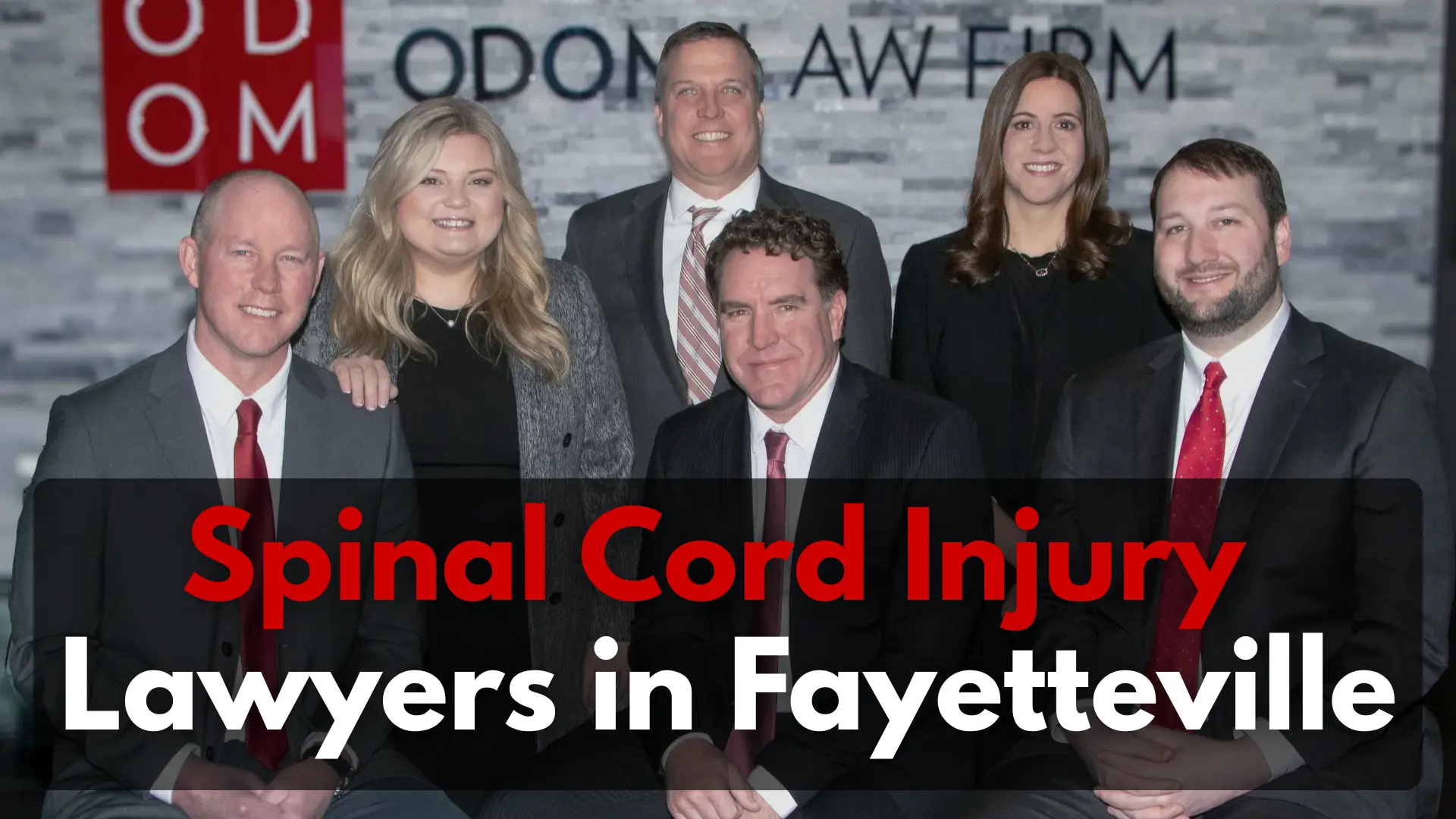
If you or a loved one has suffered a spinal cord injury, you understand how life-altering this event can be. A spinal cord injury can result in permanent disability. It requires lifelong medical care, rehabilitation, and significant lifestyle adjustments. At Odom Law Firm, we recognize the devastating impact these injuries have on you and your family. Our experienced spinal cord injury attorneys in Fayetteville, Arkansas, work to secure the compensation you deserve. This covers your medical expenses, lost wages, and pain and suffering.
With over 43 years of experience handling catastrophic injury cases, our team has recovered millions of dollars for clients. We serve clients throughout Arkansas and nationwide. We understand spinal cord injury litigation and work tirelessly to hold negligent parties accountable. Our Fayetteville personal injury lawyers have dedicated their careers to helping injured individuals and families navigate the complex legal process.
Why Choose Odom Law Firm for Your Spinal Cord Injury Case
Odom Law Firm has protected Arkansas families since 1982, with more than 100 combined years of experience in catastrophic and spinal cord injury cases. We know the medical, financial, and emotional challenges that follow these injuries.
Clients and families choose Odom Law Firm for spinal cord injury claims because of our experience and proven results:
- $1.2 million settlement for a worker struck by a crane, suffering spinal and shoulder injuries.
- Extensive work with paralysis, severe fractures, and permanent disability litigation.
- Immediate collaboration with top spinal injury medical experts.
- Contingency basis—no upfront legal fees for clients.
- Direct communication and 24/7 support throughout each case.
We fight for full compensation and compassionate legal help after devastating spinal cord injuries.
Understanding Spinal Cord Injuries and Your Legal Rights
A spinal cord injury occurs when trauma damages the nerve fibers in your spinal cord. This disrupts communication between your brain and the rest of your body. The spinal cord is a bundle of nerves. It runs through the vertebral column. It transmits signals that control movement, sensation, and bodily functions. When this delicate structure is damaged, the consequences can be severe and permanent. According to the National Institute of Neurological Disorders and Stroke (NINDS), spinal cord injuries affect approximately 17,700 people annually in the United States.
Spinal cord injuries are classified by their location and severity. The spinal cord contains different regions: the cervical spine (neck), thoracic spine (mid-back), lumbar spine (lower back), and sacral spine (tailbone). Injuries to the cervical spine typically result in more extensive paralysis than injuries lower in the spine. Understanding the classification of spinal cord injuries helps determine the appropriate legal strategy and compensation framework.
Types of Spinal Cord Injuries: Paraplegia vs. Quadriplegia
Paraplegia occurs when a spinal cord injury affects the lower body. It results in partial or complete loss of function in the legs and lower torso. Individuals with paraplegia may retain full upper body function. They maintain mobility in their arms and hands. However, they typically require a wheelchair for mobility. Paraplegia settlements often account for long-term mobility assistance and home modifications.
Quadriplegia (also called tetraplegia) results from injuries to the cervical spine. It affects all four limbs, as well as the torso. This type of injury is more severe. It often requires extensive medical support, including assistance with breathing, eating, and personal care. Quadriplegia cases typically involve higher compensation due to the extensive lifetime care requirements.
Spinal cord injuries are further classified as either complete or incomplete. A complete spinal cord injury means the nerve fibers are fully severed. This results in total loss of function below the injury site. An incomplete spinal cord injury means some nerve fibers remain intact. Individuals may retain partial function or sensation below the injury level. The American Spinal Injury Association (ASIA) provides standardized classification systems for assessing injury severity.
Common causes of spinal cord injuries in Arkansas include:
- Motor vehicle accidents (car, truck, and motorcycle collisions)
- Falls from heights or on slippery surfaces
- Construction site accidents and equipment failures
- Workplace injuries
- Sports and recreational accidents
- Acts of violence or assault
- Medical malpractice during surgery or treatment
Why Spinal Cord Injury Cases Require Experienced Legal Representation
Spinal cord injury cases are among the most complex personal injury claims. Unlike minor injuries that heal within weeks or months, spinal cord injuries often result in permanent disability. They require lifetime medical care and support. This complexity demands attorneys with knowledge and experience in catastrophic injury litigation. Our Fayetteville catastrophic injury lawyers understand the nuances of these cases.
Insurance companies understand the significant financial exposure these cases represent. They employ aggressive tactics to minimize payouts. They dispute the severity of the injury. They question the necessity of recommended treatments. They argue that pre-existing conditions contributed to the injury. Without experienced legal representation, injured individuals often accept settlements far below what their cases are actually worth. This is why hiring a spinal cord injury attorney early in the process is critical.
How Insurance Companies Undervalue Spinal Cord Injury Claims
Insurance adjusters frequently underestimate the true cost of spinal cord injuries. They fail to account for lifetime medical expenses. They may calculate damages based on current medical bills alone. They ignore the reality that individuals with spinal cord injuries require ongoing care for decades. They also undervalue non-economic damages like pain and suffering, loss of consortium, and emotional distress.
At Odom Law Firm, our attorneys understand these tactics. Our founding attorney worked as an insurance adjuster before becoming a trial lawyer. This unique perspective allows us to anticipate insurance company arguments. We build cases that counter their strategies effectively. We work with medical experts, vocational rehabilitation specialists, and life care planners. We document the true lifetime cost of your injury. We present compelling evidence to insurance companies and juries.
Our team includes attorneys recognized by Martindale-Hubbell with AV ratings—the highest peer review rating available. Alan L. Lane and Matthew L. Lindsay have been recognized as Super Lawyers Rising Stars. They serve on the Board of Governors of the Arkansas Trial Lawyers Association. This recognition reflects our commitment to excellence. It demonstrates our track record of success in catastrophic injury cases. Our experienced trial attorneys have successfully litigated complex injury cases throughout Arkansas.
Key factors that impact spinal cord injury settlements include:
- The severity and completeness of the spinal cord injury
- The injured person’s age and life expectancy
- Lifetime medical and rehabilitation costs
- Lost wages and diminished earning capacity
- Extent of pain and suffering
- Impact on quality of life and relationships
- Strength of liability evidence
- Insurance policy limits
Compensation Available in Spinal Cord Injury Cases
Individuals who suffer spinal cord injuries due to another party’s negligence may recover several types of damages. Understanding what compensation is available helps you recognize the true value of your claim. It ensures you don’t accept an inadequate settlement. Spinal cord injury compensation can include both economic and non-economic damages.
Economic damages compensate you for quantifiable financial losses resulting from your injury. These include all medical expenses related to your injury. This covers emergency care, hospitalization, surgery, rehabilitation, physical therapy, and ongoing medical treatment. As your condition evolves, you may require assistive devices. These include wheelchairs, specialized beds, bathroom equipment, and communication devices. Home modifications are also recoverable. These include wheelchair ramps, accessible bathrooms, and elevator installations. Economic damages further include lost wages from the time of your injury through your recovery period. They also include diminished earning capacity if your injury prevents you from returning to your previous occupation.
Non-economic damages compensate you for subjective losses that don’t have a specific dollar amount. These include pain and suffering—the physical pain and emotional anguish you experience as a result of your injury. Loss of consortium refers to the impact your injury has on your relationships with family members. This includes loss of companionship, intimacy, and the ability to participate in family activities. Emotional distress damages account for anxiety, depression, and psychological trauma resulting from your injury. Loss of enjoyment of life recognizes that your injury has permanently altered your ability to engage in activities you previously enjoyed.
Punitive damages may be available in cases involving gross negligence, reckless conduct, or intentional wrongdoing. These damages punish the defendant and deter similar conduct in the future. While not available in all cases, punitive damages can significantly increase your total recovery when the defendant’s conduct was particularly egregious. Catastrophic injury settlements often include punitive damages when negligence is severe.
Our firm has recovered substantial settlements and verdicts in catastrophic injury cases. In one construction site negligence case, we secured a $5.25 million settlement for a client with shoulder and knee injuries. The client required multiple surgeries. In another case involving a crane strike that caused spinal and shoulder injuries, we obtained a $1.2 million settlement. These results demonstrate our ability to secure significant compensation for clients with severe, life-altering injuries. Our case results speak to our commitment to maximizing client recovery.
Calculating Lifetime Medical Costs for Spinal Cord Injuries
The lifetime cost of a spinal cord injury is substantial. According to medical research published by the National Institutes of Health (NIH), the first-year medical expenses for a spinal cord injury can range from approximately $550,000 to $1.37 million or more. The severity and location of the injury determine the exact cost. Paraplegia typically costs $550,000-$687,000 in the first year. High-level quadriplegia (C1-C4) can exceed $1.1 million to $1.37 million. Subsequent years typically involve $40,000 to $180,000 in annual medical expenses. Over a 40-year lifespan following the injury, total costs can easily exceed $2 million to $5 million or more.
These costs include not only direct medical care but also home care attendants, modifications to living spaces, specialized transportation, and equipment replacement. Our attorneys work with life care planners and medical experts. We calculate these costs accurately. We present them persuasively to insurance companies and juries. Understanding spinal cord injury damages requires expertise in both medical and financial analysis.
How Odom Law Firm Handles Spinal Cord Injury Claims
Our approach to spinal cord injury cases is comprehensive and client-focused. We understand that you’re facing overwhelming medical challenges and financial uncertainty. Our goal is to handle the legal aspects of your case. This allows you to focus on your recovery and rehabilitation. Our personal injury litigation process is designed to maximize your recovery.
Our process begins with a thorough investigation. We gather evidence from the accident scene. We obtain police reports and witness statements. We collect medical records documenting your injuries and treatment. We work with accident reconstruction experts when necessary. We establish how the injury occurred and who bears responsibility. For motorcycle accident injuries, pedestrian accidents, or bicycle accidents, we apply specialized investigation techniques.
We coordinate with medical experts to evaluate your injury. We document its severity. We establish the prognosis for your recovery. We consult with vocational rehabilitation specialists. We assess your ability to return to work. We calculate lost earning capacity. Life care planners help us project your lifetime medical and care needs. We ensure your settlement accounts for all future expenses.
We handle all negotiations with insurance companies. Our experience and track record give us credibility in settlement discussions. Insurance adjusters know that we’re prepared to take cases to trial if necessary. This motivates them to offer fair settlements rather than risk a jury verdict.
If settlement negotiations don’t result in fair compensation, we prepare your case for trial. Our attorneys have extensive trial experience. We have successfully presented catastrophic injury cases to juries. We prepare compelling evidence, expert testimony, and client testimony. We demonstrate the full impact of your injury and the compensation you deserve.
Throughout your case, we work on a contingency fee basis. You pay no upfront costs. We only recover a fee if we secure compensation for you through settlement or verdict. This arrangement ensures that cost is never a barrier to obtaining quality legal representation.
Our Approach to Building a Strong Spinal Cord Injury Case
We build strong cases by combining thorough investigation, expert testimony, and compelling client narratives. We document every aspect of your injury and its impact on your life. We gather medical records, rehabilitation reports, and testimony from healthcare providers. We interview family members about how your injury has affected your relationships and quality of life. We present this evidence in a way that helps insurance adjusters and juries understand the human impact of your injury.
Steps we take to support your recovery include:
- Comprehensive investigation of the accident and liability
- Coordination with medical experts and specialists
- Retention of vocational rehabilitation experts
- Engagement of life care planners for lifetime cost projections
- Detailed documentation of all damages
- Strategic negotiation with insurance companies
- Preparation for trial if settlement is inadequate
- Compassionate client communication throughout the process
Frequently Asked Questions About Spinal Cord Injury Claims
What is the average settlement for a spinal cord injury in Arkansas?
There is no single “average” settlement for spinal cord injuries because each case is unique. Settlements depend on factors such as the severity of the injury, the injured person’s age, the strength of liability evidence, and the defendant’s insurance coverage. Severe spinal cord injuries resulting in permanent paralysis typically lead to the highest settlements, while less severe incomplete injuries generally result in lower compensation. Our attorneys can evaluate your specific circumstances and provide an estimate of your case’s value. Spinal cord injury claims require individualized analysis.
How long does a spinal cord injury case take to resolve?
The timeline for resolving a spinal cord injury case varies. Some cases settle within 6 to 12 months, while others may take 2 to 3 years or longer. The timeline depends on how quickly your medical condition stabilizes. It depends on how long settlement negotiations take. It depends on whether the case proceeds to trial. We work to resolve cases efficiently while ensuring we secure fair compensation. We never rush to settle if doing so would result in inadequate compensation.
What evidence do I need to prove my spinal cord injury claim?
You need evidence establishing both liability and damages. Liability evidence includes police reports, witness statements, photographs of the accident scene, and expert testimony about how the accident occurred. Damages evidence includes medical records, imaging studies (MRI, CT scans), testimony from healthcare providers, rehabilitation records, and documentation of lost wages. We gather and organize all necessary evidence to build a compelling case. For premises liability claims, dog bite injuries, or slip and fall accidents, evidence collection follows similar protocols.
Can I still file a claim if I was partially at fault for my injury?
Yes. Arkansas follows a comparative negligence rule. You can recover compensation even if you were partially at fault. You must not be more than 50% responsible for the accident. If you were 30% at fault and the defendant was 70% at fault, you can recover 70% of your damages. We evaluate liability carefully and advocate for a fair allocation of responsibility. This principle applies to uninsured driver accidents, rideshare accidents, and hit-and-run cases.
What should I do immediately after a spinal cord injury?
Seek immediate medical attention. Call 911 if you’ve suffered a traumatic injury. Do not move unnecessarily, as movement can worsen a spinal cord injury. Once you receive medical care, preserve evidence by taking photographs of the accident scene. Obtain contact information from witnesses. Keep all medical records. Contact an experienced spinal cord injury attorney as soon as possible. Early legal intervention helps preserve evidence and protect your rights.
How much does it cost to hire a spinal cord injury lawyer?
At Odom Law Firm, we represent spinal cord injury clients on a contingency fee basis. You pay no upfront costs. We only recover a fee if we secure compensation for you through settlement or verdict. Our fee is a percentage of the compensation we recover. This arrangement ensures that cost is never a barrier to obtaining quality legal representation. It aligns our interests with yours—we only succeed financially if we secure compensation for you.
Contact Odom Law Firm for Your Free Spinal Cord Injury Consultation
If you’ve suffered a spinal cord injury due to someone else’s negligence, you deserve experienced legal representation fighting for your rights. Odom Law Firm has been serving clients throughout Arkansas and nationwide since 1982. Our team of dedicated personal injury attorneys has recovered millions of dollars for clients with catastrophic injuries.
We offer free consultations to discuss your case and explain your legal options. During your consultation, we’ll listen to your story, answer your questions, and provide an honest assessment of your claim’s value. We’ll explain how we can help you pursue compensation for your medical expenses, lost wages, pain and suffering, and other damages. Give us a call at 479-442-7575 today for a free consultation.