
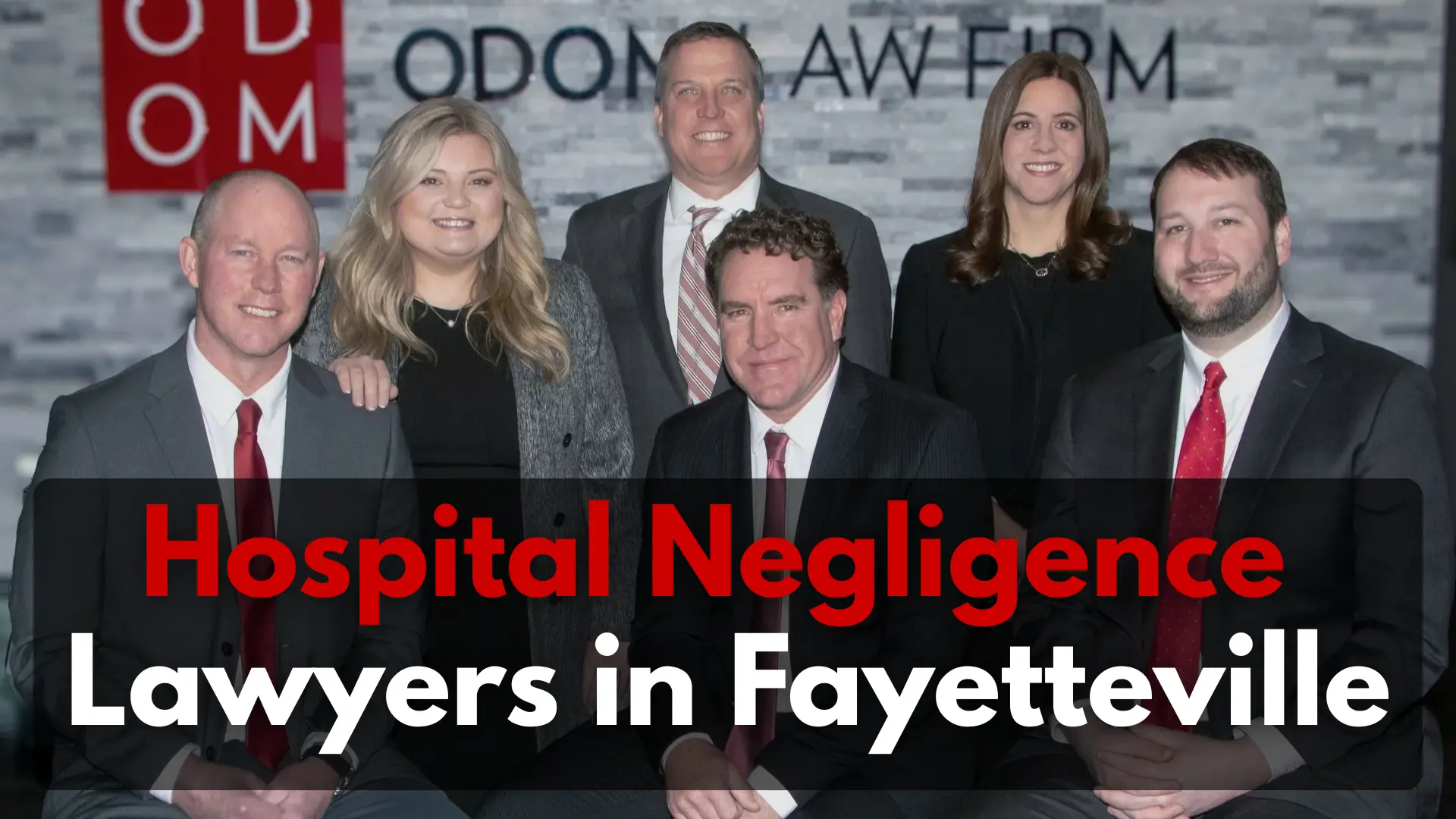
When a hospital’s negligence injures you or a loved one, you need an attorney who understands medical and legal issues. Odom Law Firm has represented injured patients since 1982. We hold hospitals accountable for errors that harm patients. Our Fayetteville hospital negligence attorneys bring over 100 years of combined legal experience to every case. We work on a contingency basis—you pay nothing unless we recover compensation for you.
Why Choose Odom Law Firm for Your Hospital Negligence Claim
Since 1982, Odom Law Firm has helped clients across Arkansas hold hospitals accountable for negligent care and life-changing mistakes. We’ve built a proven track record, focusing exclusively on personal injury and medical negligence claims.
Clients choose our team for hospital negligence litigation because:
- We have more than 100 years of combined personal injury experience.
- Recent hospital negligence results include:
- $4.26 million settlement when a pathologist failed to diagnose cancer in four patients.
- $2.8 million settlement for a patient whose stroke went undiagnosed.
- $2.85 million settlement for a family after a hospital failed to diagnose cancer, resulting in catastrophic injury.
- $3.5 million settlement for cancer misdiagnosis causing permanent harm.
- Personalized, thorough investigation and access to a national network for complex or multi-state claims.
- Contingency fee model means no client pays unless compensation is obtained.
Our entire team is dedicated to helping you recover after hospital negligence—guiding you from your first call through resolution or trial.
What Is Hospital Negligence?
Hospital negligence occurs when a hospital or its staff fails to provide the standard of care expected in the medical profession. This failure results in patient injury. Unlike medical malpractice claims against individual doctors, hospital negligence claims hold the institution itself liable. Systemic failures, inadequate staffing, poor training, or failure to maintain safe conditions can all create hospital negligence liability.
To prove hospital negligence, you must establish four key elements: (1) the hospital owed you a duty of care, (2) the hospital breached that duty through negligent action or inaction, (3) the breach directly caused your injury, and (4) you suffered measurable damages. Damages include medical expenses, lost wages, pain and suffering, or permanent disability.
Hospitals can be held liable for employee negligence under the doctrine of vicarious liability. Additionally, hospitals face direct liability when they fail to properly credential physicians, maintain equipment, implement safety protocols, or staff adequate personnel. Hospital negligence can occur in emergency departments, surgical suites, maternity wards, intensive care units, and patient rooms.
How Hospital Negligence Differs from Medical Malpractice
Medical malpractice typically involves a healthcare provider’s individual error. A surgeon’s mistake during an operation or a doctor’s misdiagnosis are examples. Hospital negligence focuses on the institution’s failures instead. Inadequate staffing delays treatment. Broken equipment wasn’t maintained. Systemic failures in patient monitoring occur. While a single doctor’s error may constitute malpractice, that same error compounded by hospital system failures creates hospital negligence liability.
Common Types of Hospital Negligence Cases
Hospital negligence takes many forms. Misdiagnosis and failure to diagnose occur when hospital staff overlook symptoms. Staff may fail to order necessary tests, delaying critical treatment. Surgical errors include wrong-site surgery, retained surgical instruments, or damage to surrounding tissue. Medication errors range from incorrect dosages to administering the wrong drug entirely.
Hospitals also commit negligence by failing to monitor patients adequately. Missed warning signs of deterioration can have serious consequences. Inadequate staffing causes delayed treatment and increased error rates. Infection control failures expose patients to preventable hospital-acquired infections. Equipment malfunction or misuse—when hospitals fail to maintain or properly train staff on medical devices—results in serious patient harm. Other common negligence includes failure to treat, improper anesthesia administration, and failure to communicate critical test results to physicians.
Common Hospital Negligence Types:
- Misdiagnosis and failure to diagnose
- Surgical errors and wrong-site surgery
- Medication errors and incorrect dosages
- Failure to monitor patients
- Inadequate staffing and delayed treatment
- Infection control failures and hospital-acquired infections
The Hospital Negligence Claims Process
Pursuing a hospital negligence claim requires careful investigation, expert analysis, and strategic negotiation. Our process begins with a thorough consultation. We evaluate your case, explain your legal options, and answer your questions. We never charge for this initial evaluation.
Once we represent you, we conduct a comprehensive investigation. We obtain and review all medical records. We identify where the hospital’s care fell below the standard. We retain qualified medical experts in the relevant specialty. Radiologists review misdiagnosis cases. Surgeons review surgical errors. Nurses review staffing negligence. These experts provide expert testimony about your records. We analyze the hospital’s policies and procedures. We show how they deviated from established protocols. We review staff credentialing to determine if the hospital hired or retained unqualified personnel.
We then negotiate with the hospital’s liability insurance carrier. We present evidence of negligence and damages. Many cases settle during this phase. If the hospital refuses fair compensation, we prepare your case for trial. We’re ready to present your claim before a jury. Contact us today to discuss your case.
How We Investigate Hospital Negligence Cases
Our investigation process is thorough and methodical. We obtain complete medical records. Qualified medical experts review them. They identify deviations from the standard of care. We analyze hospital policies, procedures, and protocols. This establishes what the hospital should have done. We review staff credentials and training records. We determine if negligence resulted from inadequate hiring or training. We examine equipment maintenance logs. We identify equipment failures. We interview witnesses and gather evidence of similar incidents at the hospital. This shows a pattern of negligence.
Our Investigation Includes:
- Detailed medical record review by qualified experts
- Hospital policy and procedure analysis
- Staff credentialing and training record review
- Equipment maintenance and malfunction investigation
- Witness interviews and evidence gathering
Frequently Asked Questions About Hospital Negligence
What is the statute of limitations for hospital negligence in Arkansas?
In Arkansas, you generally have two years from the date of the hospital’s negligent act to file a hospital negligence claim. Arkansas does not recognize a general discovery rule for medical malpractice cases. However, if the negligence involved a foreign object left in your body, you may have one year from the date you discovered the object. Additionally, if you were under continuous, active treatment with the negligent provider, the deadline may be extended until that treatment ends.
For minors age 9 or younger, the lawsuit must be filed by their 11th birthday or within two years of the negligent act, whichever is later. If the injury wasn’t discovered before age 11, you have two years from discovery but no later than age 19. For minors age 10 and older, the standard two-year statute of limitations applies from the date of the negligent act. It’s critical to act quickly—waiting too long can bar your claim entirely. Learn about your legal rights in a free consultation.
How much is my hospital negligence case worth?
Your case’s value depends on several factors. The severity of your injury matters. Your medical expenses (past and future) matter. Lost wages, pain and suffering, permanent disability, and the impact on your quality of life all factor in. Cases involving misdiagnosis of cancer, stroke, or other serious conditions typically result in higher settlements. Our firm has recovered substantial settlements in hospital negligence cases.
Do I need an expert witness for a hospital negligence claim?
Yes. Arkansas law requires expert testimony to establish that the hospital breached the standard of care. We retain qualified medical experts in the relevant specialty. They review your case and testify about how the hospital’s actions fell below accepted medical standards. Without expert testimony, your claim cannot proceed. Our attorneys have extensive experience working with medical experts.
Can I sue a hospital for employee negligence?
Yes. Hospitals can be held liable for their employees’ negligence under the doctrine of vicarious liability. Additionally, hospitals face direct liability when they fail to properly hire, train, supervise, or credential staff. If a hospital knew (or should have known) an employee was incompetent or dangerous, the hospital itself bears liability. Workplace accidents and institutional negligence require experienced legal representation.
What if I signed a liability waiver?
Liability waivers are generally unenforceable in medical negligence cases. This is particularly true when the negligence is gross or the waiver is unconscionable. Hospitals cannot ask patients to waive their right to sue for the hospital’s negligence as a condition of treatment. If you signed a waiver, discuss it with us—it likely won’t prevent your claim. Contact our firm for a free evaluation.
How long does a hospital negligence case take?
Most hospital negligence cases take 1 to 3 years from filing to resolution. Simple cases with clear liability may settle within 12-18 months. Complex cases involving multiple experts, disputed causation, or trial preparation may take longer. We keep you informed throughout the process. We work efficiently to resolve your case. Our track record speaks for itself.
Contact Odom Law Firm for Your Free Consultation
If a hospital’s negligence harmed you or a loved one, don’t wait. Contact Odom Law Firm today for a free case evaluation. Our Fayetteville personal injury attorneys understand the physical, emotional, and financial toll hospital negligence takes on families. We’re committed to holding hospitals accountable. We work to maximize the compensation you deserve.
We represent clients on a contingency basis—you pay nothing unless we recover money for you. Call 479-442-7575 or complete our online contact form to schedule your free consultation. We’re here to fight for you.