
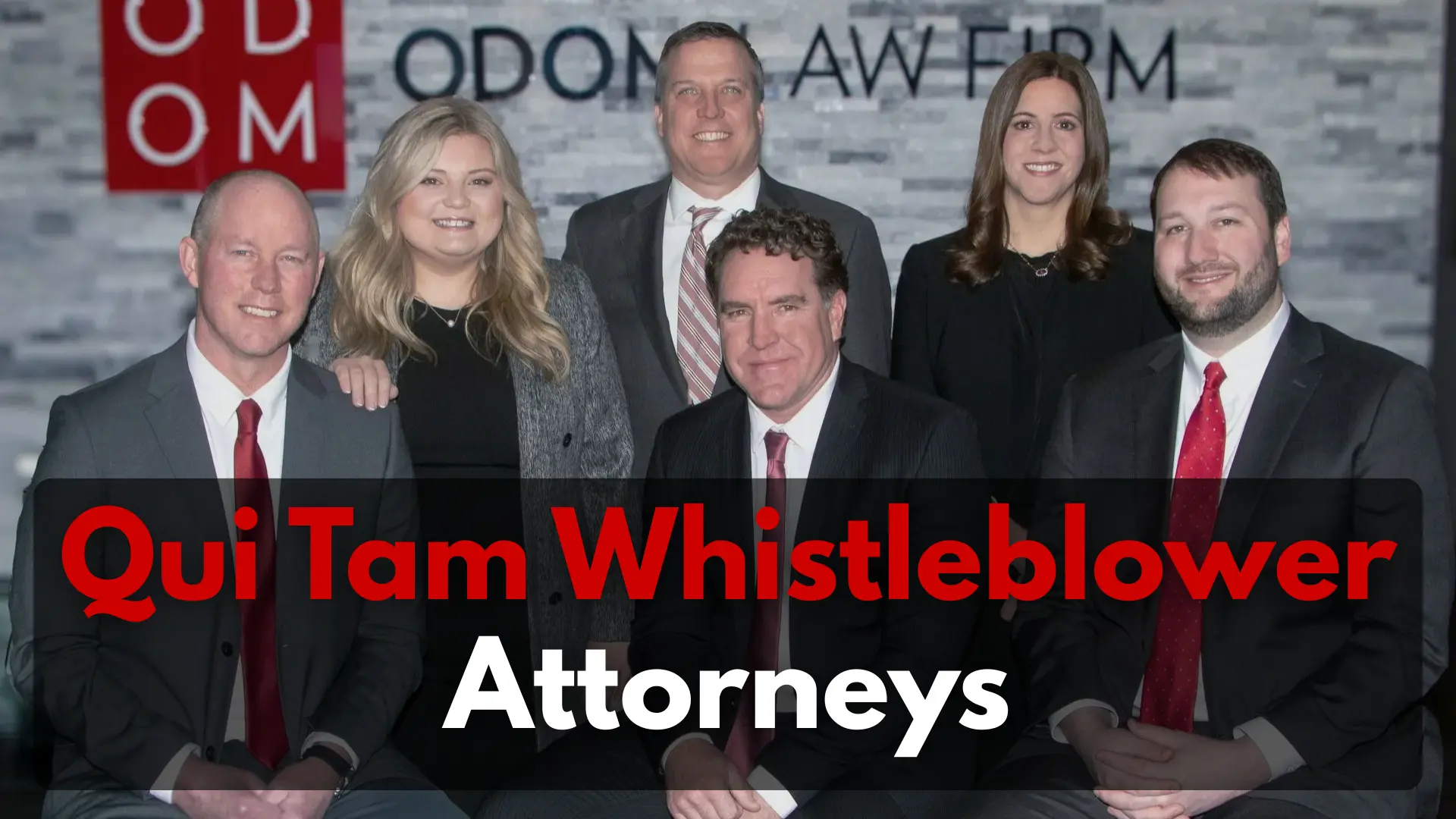
At Odom Law Firm, we represent healthcare whistleblowers throughout the nation who have discovered fraud and wish to protect patients while holding wrongdoers accountable. Our Fayetteville, Arkansas-based firm brings substantial litigation experience to False Claims Act cases. Learn more about Odom Law Firm and our commitment to justice. Call 479-442-7575 or contact us to schedule your confidential consultation.
Why Healthcare Whistleblowers Choose Odom Law Firm
Reporting healthcare fraud or government contract violations requires skill, resources, and strategies proven in court. Since 1982, Odom Law Firm has helped clients and whistleblowers pursue False Claims Act cases and complex federal litigation. Here’s why clients and referring counsel turn to our team:
- Significant experience with federal whistleblower claims and commercial litigation, including matters involving government agencies, healthcare providers, and regulatory violations.
- Attorneys have obtained substantial recoveries for whistleblowers and plaintiffs in multi-million dollar litigation.
- Capability to conduct thorough investigations and work with government agencies, as well as prepare cases for trial when needed.
- Commitment to supporting clients through the unique challenges and demanding circumstances faced by whistleblowers.
- Network of co-counsel relationships nationwide, while maintaining a local presence in Fayetteville.
Odom Law Firm is prepared to help you navigate every step of qui tam litigation and seek compensation for eligible claims.
Understanding the False Claims Act and Qui Tam Actions
The False Claims Act (FCA) provides a legal mechanism for individuals with knowledge of healthcare fraud to come forward and seek justice. Known as “qui tam actions”—derived from the Latin phrase “qui tam pro domino rege quam pro se ipso” (who sues on behalf of the king as well as for himself)—these lawsuits allow private citizens, called relators, to file cases on behalf of the United States government.
Healthcare fraud represents a significant area of False Claims Act litigation. When healthcare providers, suppliers, or contractors submit false or fraudulent claims to Medicare, Medicaid, or other federal healthcare programs, they violate the FCA. Odom Law Firm represents healthcare whistleblowers in Fayetteville, Arkansas and throughout the nation who have discovered fraud and wish to protect patients while holding wrongdoers accountable.
Congress enacted the False Claims Act during the Civil War era. The statute was designed to combat fraud by military suppliers. Today, the law remains an important tool for combating healthcare fraud. The statute allows relators to file lawsuits on behalf of the United States government. The government retains the right to investigate and potentially take over the case. This structure creates an incentive for whistleblowers to report fraud while ensuring government oversight of the litigation process.
What Constitutes Healthcare Fraud Under the False Claims Act
Healthcare fraud takes many forms within the federal healthcare system. Common examples include billing for services never rendered, upcoding procedures to obtain higher reimbursement rates, submitting claims for medically unnecessary treatments, and failing to disclose material information required by government contracts. Our firm has extensive experience handling healthcare fraud cases and can help you understand whether your situation involves actionable violations.
The FCA applies to any false claim submitted to the federal government for payment or approval. In healthcare, this includes claims submitted to Medicare, Medicaid, TRICARE, the Veterans Health Administration, and other federal healthcare programs. The law holds that any person who knowingly presents a false or fraudulent claim violates the statute. Qui tam whistleblowers often discover these violations through their employment in healthcare settings.
Whistleblowers often discover fraud through their employment in healthcare settings. Billing specialists, nurses, physicians, medical coders, compliance officers, and administrative staff frequently encounter fraudulent billing practices or improper claims submissions. These individuals face difficult decisions about whether to report the fraud internally or seek legal counsel. Our attorneys help healthcare professionals understand their whistleblower protections and legal options.
Healthcare fraud schemes vary widely in scope and sophistication. Some involve systematic overbilling or billing for services not provided. Others involve kickback arrangements where providers receive payments in exchange for referrals or prescriptions. Still others involve false certifications of compliance with regulatory requirements. The FCA provides a legal avenue for whistleblowers to report fraud and recover damages on behalf of the government.
The Qui Tam Process and Your Rights as a Whistleblower
When a whistleblower files a qui tam action, the case is initially filed under seal. This means the complaint remains confidential. The defendant receives no notice of the lawsuit. The seal period typically lasts 60 days, though the government can request extensions. During this time, the Department of Justice investigates the allegations to determine whether to intervene in the case.
If the government decides to intervene, it takes over the litigation and becomes the primary party. The relator (whistleblower) remains a party to the case and can continue to participate. If the government declines to intervene, the relator may proceed with the lawsuit independently. This path presents greater challenges and expenses. False Claims Act litigation requires experienced counsel to navigate these complex decisions.
The False Claims Act provides substantial financial incentives for whistleblowers. Relators who successfully pursue qui tam actions receive between 15 and 30 percent of any recovery obtained through settlement or judgment. In cases where the government intervenes, the relator typically receives 15 to 25 percent. When the relator proceeds alone, the percentage may reach 25 to 30 percent. These percentages apply to the total recovery, which includes treble damages and civil penalties.
The qui tam process begins with filing a complaint that details the alleged fraud. The complaint must contain sufficient factual allegations to support the claims. An attorney experienced in False Claims Act litigation helps ensure the complaint meets all legal requirements. Throughout the seal period, the government investigates the allegations, reviews documents, and interviews witnesses to determine whether the claims have merit.
Penalties and Damages in False Claims Act Cases
The FCA imposes significant penalties on those who submit false claims. For each false claim submitted, violators face civil penalties ranging from $14,308 to $28,619 (adjusted annually for inflation). Additionally, the government recovers treble damages—three times the amount of actual damages caused by the fraud. These civil penalties are enforced by the Department of Justice.
Consider a healthcare fraud scenario: if a provider submitted false claims totaling $1 million in fraudulent billings, the government could recover $3 million in treble damages plus civil penalties for each false claim. These substantial penalties create incentives for healthcare organizations to maintain compliance. They also encourage whistleblowers to report fraud they discover.
The treble damages provision represents a critical component of the FCA’s enforcement mechanism. By tripling the actual damages, the statute ensures that fraudsters face consequences severe enough to deter misconduct. The civil penalties, assessed per false claim, further increase the financial exposure for defendants. In large-scale fraud schemes involving thousands of false claims, the total penalties can reach millions of dollars.
These substantial damages and penalties serve multiple purposes. They compensate the government for losses resulting from fraud. They provide financial incentives for whistleblowers to come forward. They deter healthcare providers from engaging in fraudulent billing practices. The combination of treble damages and per-claim penalties creates an enforcement tool that has recovered billions of dollars for the federal government over the past several decades.
Whistleblower Protections and Anti-Retaliation Provisions
Federal law protects whistleblowers from retaliation. The FCA includes anti-retaliation provisions that prohibit employers from discharging, demoting, suspending, threatening, harassing, or discriminating against employees who report suspected fraud. These protections apply whether the whistleblower reports internally, to government agencies, or files a qui tam lawsuit.
If an employer retaliates against a whistleblower, the employee may pursue a separate claim for relief. This can include reinstatement, back pay, and compensation for damages resulting from the retaliation. These protections ensure that healthcare workers can report fraud without fear of losing their jobs or facing workplace harassment. Whistleblower retaliation claims are taken seriously under federal law.
The anti-retaliation provisions of the FCA recognize that whistleblowers often face significant personal and professional risks when reporting fraud. Employers may view whistleblowers as disloyal or troublemakers. Coworkers may ostracize them. Career advancement opportunities may disappear. The FCA’s anti-retaliation provisions address these concerns by providing legal remedies for employees who suffer adverse employment actions because they reported fraud.
Retaliation can take many forms. It may involve termination, demotion, or suspension. It may involve reassignment to less desirable positions or responsibilities. It may involve harassment, intimidation, or threats. It may involve exclusion from meetings or information. Any adverse employment action taken because an employee reported fraud or participated in a qui tam lawsuit constitutes illegal retaliation under the FCA.
Frequently Asked Questions About Qui Tam and Healthcare Whistleblower Cases
Here are answers to common questions about qui tam and healthcare whistleblower cases.
What types of healthcare fraud fall under the False Claims Act?
Healthcare fraud covered by the FCA includes billing for services not rendered, upcoding procedures, submitting claims for medically unnecessary treatments, kickback schemes, false certifications of compliance with regulations, and failure to disclose material information required by government contracts. Any false claim submitted to federal healthcare programs can trigger FCA liability. Examples include Medicare billing fraud, Medicaid fraud, TRICARE fraud, and Veterans Administration fraud. Our firm has handled healthcare fraud cases involving all of these violation types.
How long do qui tam cases typically take?
Qui tam litigation generally takes several years from filing through resolution. The seal period lasts at least 60 days while the government investigates. If the government intervenes, the case may proceed through discovery, motion practice, and potentially trial. Many cases settle before trial. The timeline depends on case complexity, the amount of discovery required, and whether the parties reach a settlement. Some cases resolve within two to three years, while others may take five years or longer. Our case results show the range of outcomes we have achieved.
Will my identity be kept confidential?
During the seal period, your identity remains confidential. After the seal is lifted, your identity may become known to the defendant and potentially to the public, depending on case developments. However, certain protections and confidentiality agreements may apply in some circumstances. We discuss confidentiality concerns with each client and work to protect your privacy to the extent possible under the law. In some cases, protective orders may limit disclosure of your identity or personal information.
What happens if the government declines to intervene?
If the Department of Justice declines to intervene, you may proceed with the lawsuit independently. This path requires more resources and presents greater litigation risks, as you bear the costs of litigation. However, relators have successfully pursued cases without government intervention, and the potential recovery remains substantial. We evaluate the strength of your case and advise you on the likelihood of success if the government declines to intervene. Our testimonials reflect client satisfaction with our representation.
Do I need to have direct evidence of fraud?
You do not need to have direct evidence of fraud to file a qui tam case. You must have knowledge of false claims based on information available to you. This can include circumstantial evidence, patterns of billing practices, or information from colleagues. Our attorneys evaluate the strength of your information and advise you on the viability of a potential case. We help you gather and organize evidence to support your allegations.
What protections exist if my employer retaliates against me?
The False Claims Act prohibits retaliation against whistleblowers. If your employer takes adverse action against you because you reported fraud or filed a qui tam case, you may pursue a retaliation claim. This can result in reinstatement, back pay, and damages. We advise clients on their rights and help them document any retaliatory actions. If retaliation occurs, we can pursue a separate claim for relief under the FCA’s anti-retaliation provisions.
Contact Qui Tam Whistleblower Law Firm Today
If you have discovered healthcare fraud and are considering whether to report it, contact Odom Law Firm for a confidential consultation. We evaluate potential qui tam cases at no cost and explain your options, rights, and the process involved. Our attorneys answer your questions and help you understand the implications of coming forward.
Healthcare whistleblowers play an important role in protecting the integrity of federal healthcare programs. By reporting fraud, you help prevent harm to patients and hold wrongdoers accountable. Odom Law Firm stands ready to represent you through this process.
Contact Odom Law Firm today to discuss your healthcare whistleblower case. Call 479-442-7575 or contact us to schedule your confidential consultation.