
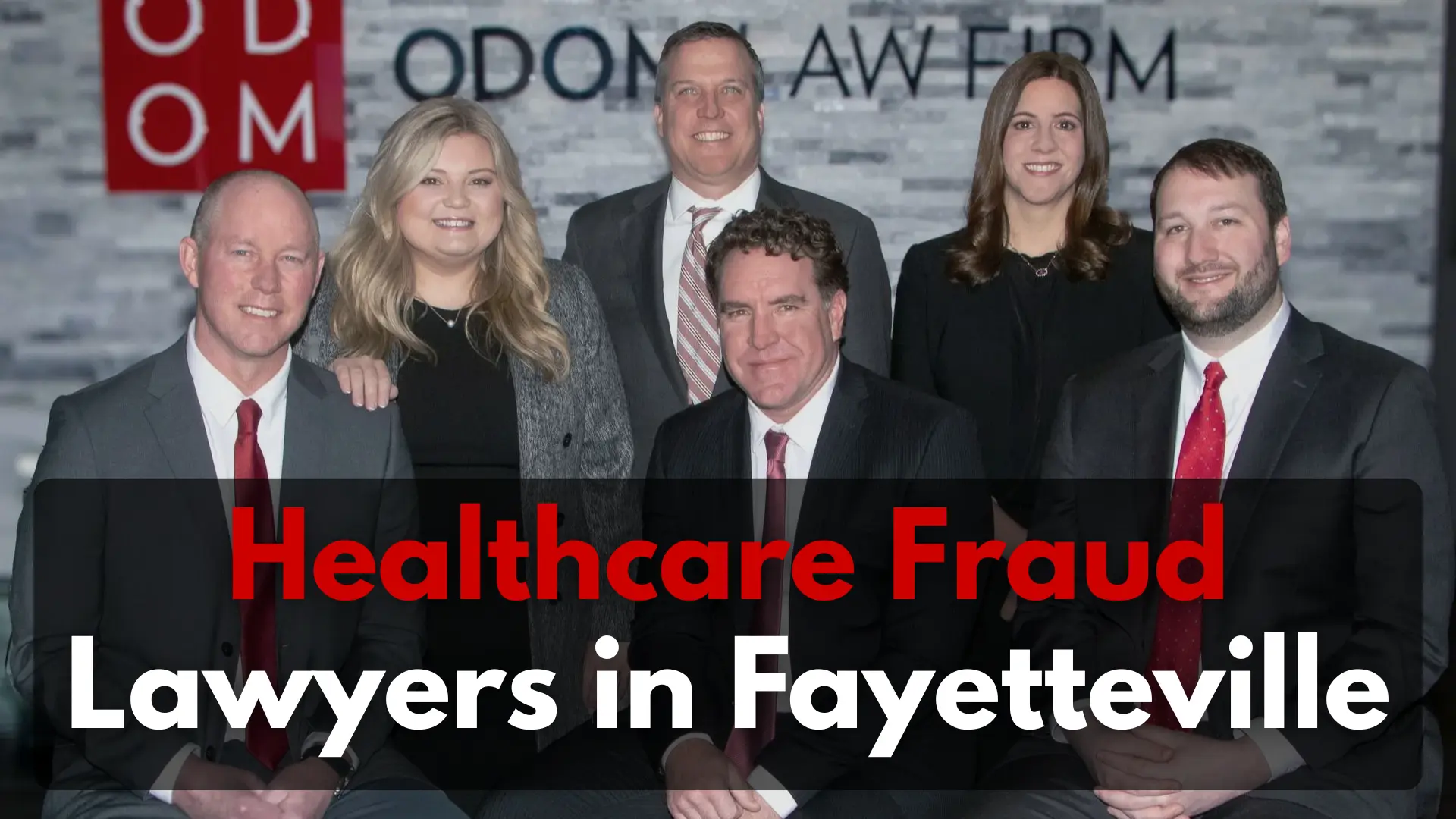
If you face allegations of healthcare fraud or have discovered fraudulent billing practices in the healthcare industry, you need experienced legal representation. Odom Law Firm represents healthcare providers, whistleblowers, and individuals involved in healthcare fraud matters throughout Arkansas and nationwide. Our attorneys understand the federal regulations governing Medicare, Medicaid, and private insurance billing. We provide defense and representation in these serious cases.
How Odom Law Firm Handles Healthcare Fraud Cases
Odom Law Firm brings litigation experience and knowledge of healthcare law to healthcare fraud matters. Our attorneys have represented healthcare providers, whistleblowers, and individuals facing healthcare fraud allegations. We understand the federal regulations governing healthcare billing and the investigative techniques used by government agencies.
Our Approach to Healthcare Fraud Defense
Our approach to healthcare fraud cases begins with thorough investigation and analysis. We review all available documents, including medical records, billing records, and communications with government agencies. We identify the specific allegations and develop a comprehensive defense strategy tailored to the unique circumstances of each case.
For Healthcare Providers Facing Investigation:
- We work to minimize disruption to your practice while protecting your legal rights.
- We communicate with investigating agencies on behalf of our clients.
- We respond to subpoenas and represent clients in grand jury proceedings.
- We explore all available options, including negotiated settlements, cooperation agreements, and trial defense.
For Whistleblowers:
- We provide representation to work toward the best possible outcome.
- We help whistleblowers understand their rights and file qui tam complaints.
- We navigate the investigation and litigation process with you.
- We work to maximize recovery for our clients while protecting them from retaliation.
How Odom Law Firm Can Help with Healthcare Fraud Allegations
Odom Law Firm provides representation in healthcare fraud matters, including investigation defense, whistleblower representation, and litigation. We help clients understand their rights, develop effective defense strategies, and work toward the best possible outcomes. Contact us today for a confidential consultation.
Why Choose Odom Law Firm for Healthcare Fraud Cases
When you’re navigating a healthcare fraud investigation, you need attorneys who understand the complexities of federal law and the risks involved for both providers and whistleblowers. Since 1982, Odom Law Firm has provided legal guidance to clients facing these serious challenges. Here are key strengths our firm brings to these cases:
- Experience representing both healthcare providers and whistleblowers in government investigations and litigation involving Medicare, Medicaid, and private insurance fraud.
- In-depth understanding of federal fraud statutes, including the False Claims Act, Anti-Kickback Statute, Stark Law, and related healthcare regulations.
- Proven approach to document review, strategy development, and agency response for each stage of the investigation or defense.
- Ability to defend providers against fraud allegations and protect whistleblowers pursuing qui tam claims or reporting fraud.
- National reach to handle healthcare fraud matters throughout Arkansas and across the country.
- Reputation for thorough preparation and client-focused advocacy in every healthcare fraud matter.
Odom Law Firm is prepared to help you address fraud allegations or pursue fraud recovery, offering the experienced legal guidance needed for high-stakes healthcare law issues.
Why Choose Odom Law Firm for Healthcare Fraud Cases
When you’re navigating a healthcare fraud investigation, you need attorneys who understand the complexities of federal law and the risks involved for both providers and whistleblowers. Since 1982, Odom Law Firm has provided legal guidance to clients facing these serious challenges. Here are key strengths our firm brings to these cases:
Experience representing both healthcare providers and whistleblowers in government investigations and litigation involving Medicare, Medicaid, and private insurance fraud.
In-depth understanding of federal fraud statutes, including the False Claims Act, Anti-Kickback Statute, Stark Law, and related healthcare regulations.
Proven approach to document review, strategy development, and agency response for each stage of the investigation or defense.
Ability to defend providers against fraud allegations and protect whistleblowers pursuing qui tam claims or reporting fraud.
National reach to handle healthcare fraud matters throughout Arkansas and across the country.
Reputation for thorough preparation and client-focused advocacy in every healthcare fraud matter.
Odom Law Firm is prepared to help you address fraud allegations or pursue fraud recovery, offering the experienced legal guidance needed for high-stakes healthcare law issues.
Turn on screen reader support
To enable screen reader support, press Ctrl+Alt+Z To learn about keyboard shortcuts, press Ctrl+slash
What is Healthcare Fraud?
Healthcare fraud occurs when individuals or organizations knowingly submit false claims for payment to government healthcare programs like Medicare and Medicaid, or to private insurance companies. Under federal law, healthcare fraud is defined as a scheme to defraud a healthcare program or to obtain money or property through false or fraudulent representations.
Healthcare fraud can take many forms, from simple billing errors to sophisticated schemes involving multiple parties. The key element in healthcare fraud cases is intent. The defendant must knowingly submit false information with the intent to defraud. This distinguishes healthcare fraud from innocent billing mistakes, which are not prosecutable offenses.
Federal Laws Addressing Healthcare Fraud
Federal law addresses healthcare fraud through multiple statutes:
18 U.S.C. § 1347 – Makes it illegal to execute or attempt to execute a scheme to defraud a healthcare program. Violations carry severe penalties, including substantial fines and imprisonment.
31 U.S.C. § 3729 (False Claims Act) – Provides civil remedies for fraudulent claims submitted to the government. This allows for recovery of treble damages and civil penalties. Odom Law Firm represents clients in False Claims Act matters, including qui tam whistleblower cases.
42 U.S.C. § 1320a-7b (Anti-Kickback Statute) – Prohibits remuneration in exchange for referrals or recommendations for healthcare services, which can distort medical decision-making and increase costs to government programs.
What Constitutes Healthcare Fraud
Healthcare fraud requires proof that the defendant knowingly submitted false information with intent to defraud. This means the defendant understood the claim was false and deliberately submitted it anyway. Negligent or accidental billing errors do not constitute fraud under federal law. Understanding these distinctions is critical when facing healthcare fraud defense allegations.
Common Types of Healthcare Fraud
Healthcare fraud schemes vary widely in complexity and scope. Understanding the different types of fraud helps healthcare providers recognize potential compliance issues and take corrective action. The most common types of healthcare fraud include:
Upcoding and Unbundling – Submitting bills for more expensive procedures than those actually performed, or billing separately for procedures that should be billed together. For example, billing for a comprehensive office visit when only a brief consultation occurred. Unbundling a surgical package to bill each component separately is also prohibited.
Billing for Services Not Rendered – Submitting claims for medical services, tests, or procedures that were never actually provided to the patient. This includes billing for services performed by providers who were not present or qualified to perform them.
Kickback Violations – Offering, paying, or receiving remuneration in exchange for referrals or recommendations for healthcare services. The Anti-Kickback Statute prohibits these arrangements. These arrangements can distort medical decision-making and increase costs to government programs.
Stark Law Violations – Making referrals for designated health services when the referring physician has a financial relationship with the entity providing the services, without meeting a specific exception. The Stark Law applies specifically to designated health services and does not extend to all types of medical referrals. These violations can result in denial of payment and significant penalties.
Ghost Patients and Unnecessary Services – Creating false patient records or billing for services provided to patients who do not exist. Billing for medically unnecessary services to inflate claims is also prohibited.
Cost Report Inflation – Submitting false or inflated cost reports to government programs to obtain higher reimbursement rates.
Understanding Qui Tam and Whistleblower Protection
The False Claims Act provides a powerful tool for combating healthcare fraud through qui tam lawsuits. A qui tam action allows private citizens, known as relators or whistleblowers, to file lawsuits on behalf of the government to recover money lost to fraud. The relator does not need to be a direct victim of the fraud. They simply need knowledge of the fraudulent scheme.
Under the False Claims Act, a person who submits or causes submission of a false claim to the government is liable for treble damages (three times the actual damages) plus civil penalties of between $14,308 and $28,619 per false claim. These substantial penalties create powerful incentives for healthcare providers to maintain accurate billing practices.
Overview of Qui Tam Lawsuits
A qui tam lawsuit is a civil action filed under the False Claims Act by a private citizen on behalf of the government. The term “qui tam” comes from the Latin phrase “qui tam pro domino rege quam pro se ipso in hac parte sequitur,” meaning “who sues for the king as well as for himself.” These lawsuits allow whistleblowers to report fraud and share in any recovery obtained.
The Qui Tam Process
The qui tam process begins when a whistleblower files a complaint under seal. The complaint remains confidential while the government investigates. The Department of Justice has the opportunity to investigate and decide whether to intervene in the case. If the government intervenes, it takes the lead in prosecuting the case. If the government declines to intervene, the whistleblower may proceed with the lawsuit independently. Successful qui tam relators typically receive between 15 and 30 percent of the recovery.
Whistleblower Protections and Rights
Whistleblowers who file qui tam lawsuits receive significant protections under federal law:
Retaliation Prohibition – The False Claims Act explicitly prohibits retaliation against employees who report suspected fraud.
Remedies for Retaliation – If an employer retaliates against an employee for reporting fraud, the employee may recover back pay, reinstatement, and additional damages.
Job Security – These protections encourage healthcare workers to report suspected fraud without fear of job loss or other adverse employment actions.
Federal Investigation and Enforcement
Healthcare fraud investigations involve multiple federal agencies working together to identify and prosecute fraudulent schemes. Recognizing the investigation process helps healthcare providers understand when they may be under investigation. This allows them to take appropriate steps to protect their rights.
Federal Agencies Investigating Healthcare Fraud
Multiple agencies play key roles in healthcare fraud investigations:
Federal Bureau of Investigation (FBI) – Investigates healthcare fraud cases involving federal healthcare programs. FBI agents conduct interviews, review financial records, and work with prosecutors to build cases against suspected fraudsters.
Department of Health and Human Services Office of Inspector General (HHS-OIG) – Investigates fraud, waste, and abuse in Medicare and Medicaid. The OIG has the authority to conduct civil investigations, administrative proceedings, and criminal referrals.
Centers for Medicare & Medicaid Services (CMS) – Monitors billing patterns and identifies providers whose claims deviate significantly from industry norms. CMS can initiate investigations and refer cases to law enforcement.
Department of Justice (DOJ) – Prosecutes healthcare fraud cases on behalf of the United States. Assistant U.S. Attorneys (AUSAs) work with investigating agencies to develop cases and present evidence to grand juries.
Investigation Stages and Timeline
Healthcare fraud investigations typically proceed through several stages:
- Initial investigation – The process may begin with a complaint from a whistleblower, a billing audit, or a pattern analysis identifying suspicious claims.
- Document requests – Investigators may issue subpoenas for medical records, billing records, and other documents.
- Target notification – Healthcare providers may receive target letters indicating they are subjects of investigation.
- Grand jury proceedings – Witnesses testify, and evidence is presented to determine whether to issue an indictment.
The investigation process can take months or years, depending on the complexity of the alleged scheme and the volume of claims involved. During this time, healthcare providers face significant uncertainty and potential disruption to their practice.
Consequences of Healthcare Fraud Allegations
Healthcare fraud allegations carry severe consequences that extend far beyond potential criminal penalties. Recognizing the seriousness of fraud allegations helps healthcare providers understand the importance of obtaining experienced legal representation immediately.
Types of Penalties and Consequences
Healthcare fraud convictions and allegations result in multiple serious consequences:
Criminal Penalties – Conviction under 18 U.S.C. § 1347 carries penalties of up to 10 years imprisonment and fines imposed under the general federal sentencing provisions (18 U.S.C. § 3571). If the fraud results in serious bodily injury, the penalty increases to 20 years imprisonment. If the fraud results in death, the penalty can reach life imprisonment.
Civil Penalties – Under the False Claims Act, defendants face liability for treble damages (three times the actual damages) plus civil penalties ranging from $14,308 to $28,619 per false claim. A single fraudulent billing scheme may involve thousands of false claims, resulting in penalties in the millions of dollars. Note: The Department of Justice adjusts civil penalty amounts annually for inflation.
Exclusion from Federal Programs – The HHS-OIG maintains an exclusion list of individuals and entities excluded from participating in Medicare, Medicaid, and other federal healthcare programs. Exclusion typically lasts a minimum of five years but may be permanent. Excluded providers cannot bill government programs and cannot work for entities that participate in government programs.
Restitution – Courts may order defendants to repay the full amount of fraudulent claims plus interest. This obligation can persist for years after conviction or settlement.
Professional License Implications – Healthcare fraud convictions may result in suspension or revocation of professional licenses, including medical licenses, nursing licenses, and other healthcare credentials. State licensing boards typically impose discipline based on criminal convictions.
Reputation and Business Damage – Healthcare fraud allegations damage professional reputation and may result in loss of patients, referral sources, and business opportunities. Even allegations that do not result in a conviction can harm a healthcare provider’s practice.
Frequently Asked Questions About Healthcare Fraud
Below are answers to the most common questions we receive about healthcare fraud.
What is the False Claims Act?
The False Claims Act is a federal statute (31 U.S.C. § 3729) that imposes liability on individuals and organizations that submit false claims to the government. The statute applies to all government programs, including Medicare, Medicaid, and military healthcare. It provides for recovery of treble damages and civil penalties, making it a powerful tool for combating fraud.
What are the most common types of healthcare fraud?
The most frequently prosecuted healthcare fraud schemes involve upcoding, billing for services not rendered, and kickback violations. These schemes often target Medicare and Medicaid, which collectively pay billions in healthcare claims annually. Investigators focus on patterns of billing that deviate significantly from industry norms or that lack supporting medical documentation. If you’re facing an investigation, contact Odom Law Firm immediately.
Can I be retaliated against for reporting fraud?
No. The False Claims Act explicitly prohibits retaliation against employees who report suspected fraud. If your employer retaliates against you for reporting fraud, you may pursue legal action. You can recover back pay, reinstatement, and additional damages.
Which agencies investigate healthcare fraud?
How long does a healthcare fraud investigation take?
Healthcare fraud investigations vary in length depending on the complexity of the case and the volume of claims involved. Some investigations conclude within months, while others may take several years. The investigation process typically includes initial inquiry, document review, witness interviews, grand jury proceedings, and potential indictment.
What are the penalties for healthcare fraud?
Penalties for healthcare fraud include criminal imprisonment (up to 10 years for basic violations, up to 20 years if serious bodily injury results), substantial fines, civil penalties under the False Claims Act (treble damages plus $14,308-$28,619 per false claim, adjusted annually for inflation), exclusion from federal healthcare programs, restitution, and potential loss of professional licenses.
What should I do if I'm under investigation for healthcare fraud?
If you receive notice that you are under investigation for healthcare fraud, contact an experienced healthcare fraud attorney immediately. Do not speak with investigators without counsel present. Do not destroy or alter any documents. Cooperate with your attorney to develop a defense strategy and explore all available options, including potential settlement or cooperation with authorities.
Contact Odom Law Firm
If you face healthcare fraud allegations or have discovered fraudulent billing practices, contact Odom Law Firm immediately. Our attorneys are available to discuss your situation and explain your legal options. We serve clients throughout Arkansas and nationwide.
Call today 479-442-7575 for a free consultation. Our attorneys are available to discuss your healthcare fraud matter and explain your legal rights and options. Time is critical in healthcare fraud cases. Contact us today.